
Good study habits for school students: a parent’s guide
Good marks come from steady habits, not last-minute effort. Here is how to help your child build a routine, study actively and learn little and often across the term.

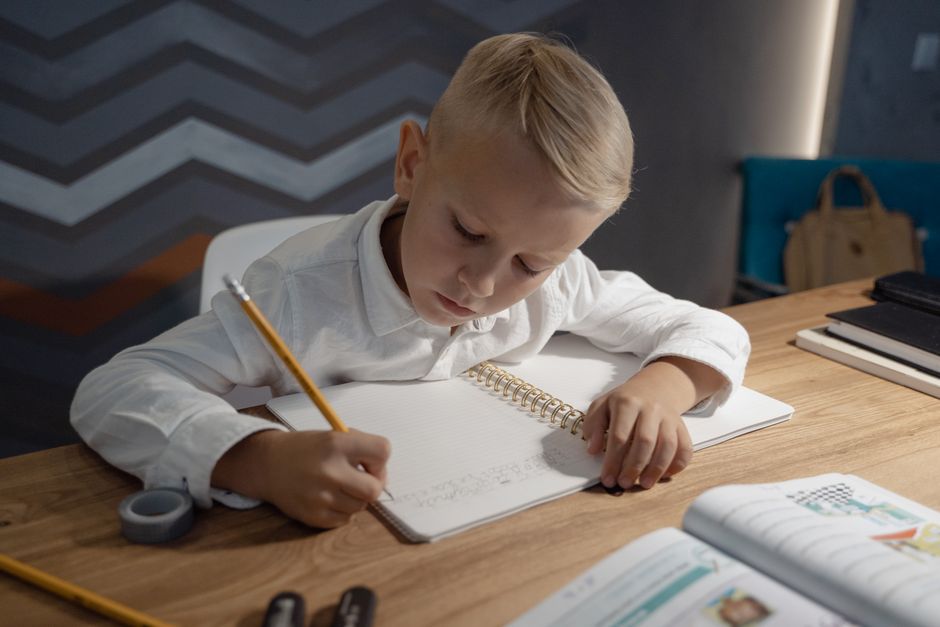
Photo: Vitaly Gariev
Most parents want the same thing: a child who can sit down, get their work done, and actually remember it later, without a nightly battle. The good news is that this is a skill, not a personality trait. Some children are not born organised or focused, and the ones who look that way have usually just fallen into a few good habits. Habits beat talent and beat last-minute effort, and they are something you can help set up at home, whether your child is in Foundation or Year 10. This guide walks through the everyday study habits that make the biggest difference across a whole term.
A quick note on scope. This is about the ongoing, week-to-week habits that keep learning steady. If your child has a specific test, NAPLAN, or a scholarship paper coming up, our guide to helping your child prepare for exams covers that run-up in detail. Think of good habits as the foundation, and exam prep as what you build on top when the time comes.
What are the most important study habits for children?
None of these are complicated, and your child does not need all of them at once. Pick one or two, let them settle for a couple of weeks, then add another. A habit that sticks is worth far more than a perfect system your child abandons by week three.
How do I help my child build a study routine?
The hardest part of study is usually starting, so a routine’s real job is to remove that daily negotiation. When homework happens at 4pm every weekday, nobody has to argue about it at 4pm. Keep sessions short and age-appropriate. A Foundation or Year 1 child has very little in the tank, so ten to fifteen focused minutes is plenty. By upper primary you might reach half an hour, and a Year 9 or 10 student can manage longer blocks with breaks. Ending while your child still has a little energy left is far better than pushing until they melt down and start to dread the whole thing.
Does a tidy, distraction-free space really make a difference?
It does not need to be a dedicated study or a beautiful desk. A cleared kitchen table works perfectly well. What matters is that the space is calm and the usual distractions are out of sight. The biggest single one is the phone, and "it’s on silent" is not enough, because a phone within reach still pulls at attention even face-down. The simplest fix is to have it charge in another room during the study block. Television and background videos come off too. Quiet instrumental music is fine for some children if it genuinely helps, but anything with lyrics or a screen attached tends to compete for the very focus you are trying to protect.
What is active recall, and why does it beat re-reading?
This is the single habit that changes results the most, and almost no child does it by default. Re-reading notes and running a highlighter over them feels like studying and is genuinely comforting, but it is mostly passive. The material starts to look familiar, so a child feels ready, then blanks in the test. Recall is the opposite: it is effortful, sometimes frustrating, and that effort is exactly what builds the memory.
It is easy to set up at any age:
- Cover and write. Cover the worked example or spelling list, then reproduce it from memory before checking.
- Ask, don’t tell. Instead of reviewing the times tables together, quiz them: "what’s seven eights?" A quick verbal test in the car counts.
- Explain it back. Ask your child to teach you the idea, out loud, without notes. The gaps show up instantly, and explaining is one of the strongest ways to lock something in.
- Use practice questions. Doing a question is a test; re-reading how to do it is not. Favour worksheets and problems over notes.
Is it better to study a little often, or in one big session?
This is why habits beat last-minute effort so decisively. The same total amount of study, spread across the week instead of dumped the night before, produces a child who actually remembers the work a month later, not just for the test. The gaps between sessions are not wasted time; they are part of how the memory sets, a bit like how a muscle grows in the rest between workouts. For younger children this can be as simple as a few minutes of reading or number facts every day. For older ones it means starting revision when a topic is taught, not when the test is announced.
Why should my child review their marked work?
Most children look at the number at the top and move on, especially if it is a good one. But a mistake your child understands and corrects is far less likely to come back. Build a small habit around it: when work comes home marked, spend a few minutes on the questions that were wrong. What was the actual slip, a careless error, a misread question, or a gap in the method? Redo it correctly. A child who treats mistakes as useful information, rather than as proof they are "bad at" something, learns faster and stays far more resilient. It also quietly teaches them that being wrong is a normal, fixable part of getting better.
Want to know exactly where your child’s gaps are? A free 30-minute assessment per subject will show you, with no cost and no obligation.
Book a free assessmentHow does staying organised help my child study?
Disorganisation costs a surprising amount of energy: the forgotten worksheet, the assignment remembered at bedtime, the frantic search for a book. A basic planner fixes most of it, and learning to use one is a habit that pays off for years, right through secondary school. Keep it simple and age-appropriate. A younger child might have a short checklist on the fridge that you fill in together. An older one can keep a diary or a phone calendar with due dates, homework, and a rough plan for bigger tasks. The habit that makes it work is the daily check-in: a set moment, perhaps at the start of the study block, to look at what is coming and decide what to do first. Model it rather than nag it, and it tends to stick.
How important are sleep and breaks?
School-aged children need a lot of sleep, and it is when the day’s learning gets consolidated. A consistent bedtime does more for concentration and mood than an extra half-hour of tired study ever could, which is another reason cramming late is a poor trade. During longer sessions, short breaks help too. A useful rhythm for older children is a focused stretch followed by a few minutes up and moving, then back to it. Younger children need breaks sooner and more often. The point is that a fresh, rested child learns more in twenty focused minutes than a drained one does in an hour of staring at the page.

Why do habits beat last-minute effort?
This is the thread running through everything above. A routine means the work gets done without a fight. A distraction-free space means the time counts. Active recall and spacing mean the learning actually lasts. Reviewing mistakes means the gaps close. A planner and enough sleep mean nothing gets forgotten and the brain is fit to work. Put together, they turn study from a stressful event into an unremarkable part of the week, and they quietly build the confidence, concentration and ability that carry across every subject. A child who has kept up all term does not need to cram, and does not dread the test.
How we help at Lynn’s Learning
We have worked with families across Melbourne’s south-east for over 30 years, and habits are a large part of what we teach, alongside the Maths and English itself. Coming to a centre at the same time each week is a routine in itself. Our personalised worksheets are built for active recall and practice, not passive reading, and every child works at their own level with an educator close by, usually around one educator to five children, so nobody drifts. We mark work, go back over the mistakes together, and help children build the steady approach that makes the rest of the week easier too.
If you are not sure where your child sits, or which habits would help most, the simplest first step is a free assessment, about half an hour per subject. It shows you where your child is strong, where the real gaps are, and what a steady plan would look like for them.
Wondering if Lynn’s Learning is right for your child? Book a free, no-obligation assessment.
Book a free assessmentFrequently asked questions
How much study should a primary-school child do each day?
Keep it short and regular. A Foundation or Year 1 child manages ten to fifteen focused minutes; by upper primary you might reach half an hour. Consistency matters far more than length, so a little most days beats a long session once a week.
My child says they’ve studied but does badly in tests. Why?
Usually because the studying was passive: re-reading and highlighting until the page feels familiar, which fools them into thinking they know it. Switch to active recall, where they close the book and test themselves. It’s harder and less comfortable, and that’s exactly why it works.
How do I get my child to study without a fight every time?
A fixed time and place is the biggest help, because it removes the daily negotiation. When study just happens at the same moment each day, sitting down stops being a decision. Keep sessions short enough that they end before your child is worn out.
Is it better to help my child or let them work independently?
Both, at the right moments. Set up the routine, space and planner together, then step back during the work itself so they build independence. A good place to help is reviewing marked work: go over the mistakes together and work out why, rather than doing it for them.
At what age should my child start using a planner or diary?
You can start simple early. A younger child can use a short checklist on the fridge you fill in together; from upper primary, a proper diary or calendar with due dates works well. Learning to use one is a habit that pays off right through secondary school.
More for parents
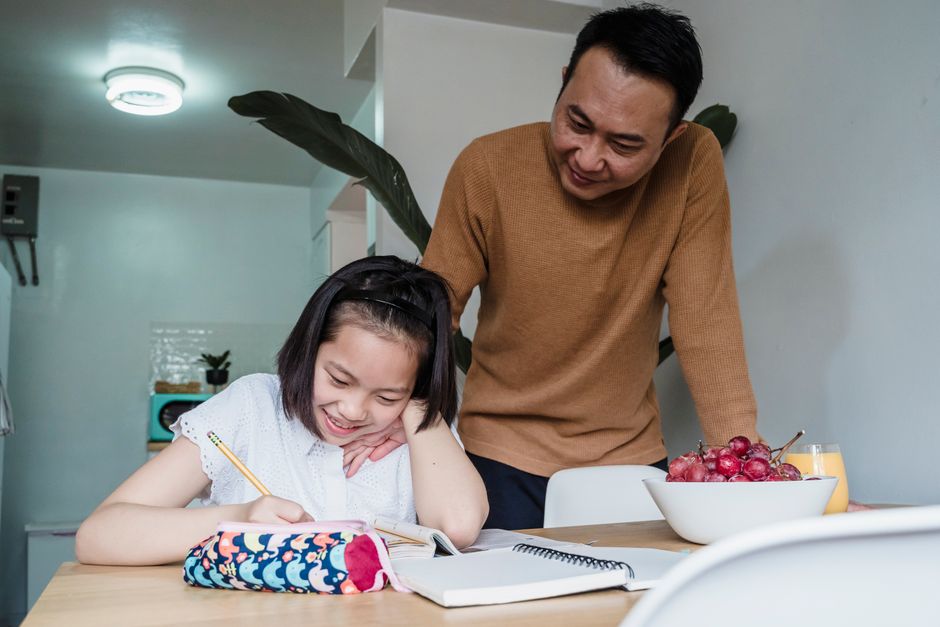
Helping your child prepare for exams, calmly
Most exam stress comes from cramming and passive study. A steady plan, real practice questions and enough sleep beat re-reading notes every time.
How to motivate your child to do homework (without the nightly battle)
The nightly homework fight is rarely about laziness. It’s usually about routine, confidence, or a gap that’s grown quietly. Here’s how to change the pattern.

Does my child need a tutor? An honest guide for Melbourne parents
Not every child needs one. The real signal is how your child feels about a subject, not just the grade, and there are clear signs to watch for.