
Online vs in-person tutoring: an honest comparison for parents
Online is convenient, and for some families that matters most. But focus, hands-on Maths and an educator who can read your child in the room are hard to replicate on a screen.
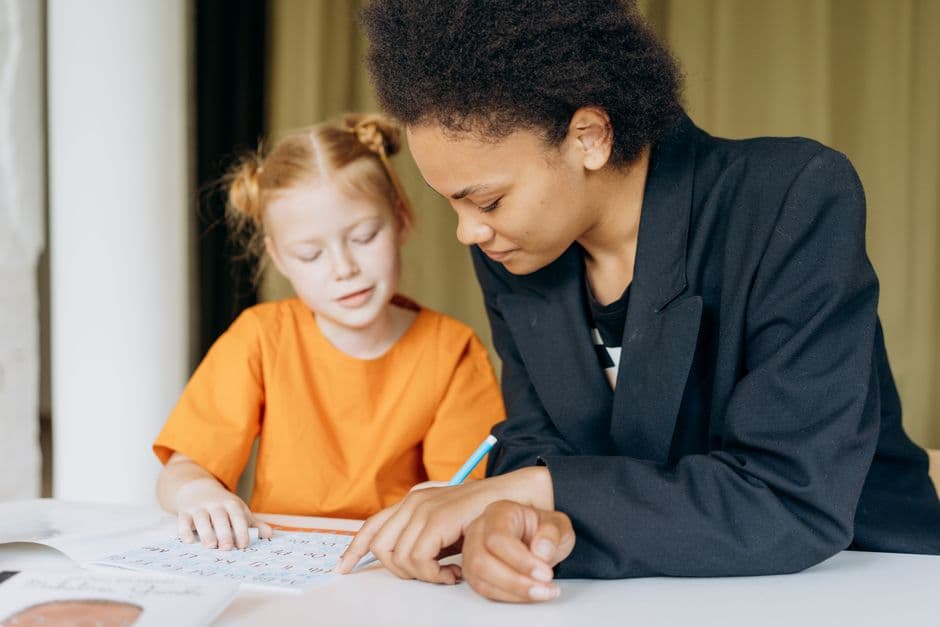
Photo: Mikhail Nilov
Since online learning became normal, most Melbourne parents weighing up extra help now face a simple-sounding question: should tutoring happen on a screen at home, or in person at a centre? Both can work, and we won’t pretend otherwise. But they aren’t the same experience, and the difference matters more for some children than others. Here is an honest look at each, so you can decide what actually suits your child.
Is online or in-person tutoring better?
The honest answer isn’t one-size-fits-all. A motivated teenager who already works well independently can thrive online. A younger child, or one who fidgets, drifts or hides confusion, usually gets far more from being in the room with an educator. Below we walk through the real trade-offs, starting with what online genuinely does well.
What are the advantages of online tutoring?
- No travel. No driving across town, no parking, no weeknight logistics. For a full family calendar, that saved time is real.
- Flexibility. Sessions can slot into gaps a centre timetable can’t always match, which helps if your week is unpredictable.
- Reach. If you’re a long way from a good centre, online opens up options you simply wouldn’t have otherwise.
- Comfort of home. Some children settle faster in a familiar space, at least at first.
We say all of that plainly because it’s true. Convenience is not nothing, especially for a busy household. The question is what you trade for it, and for a lot of children the trade is bigger than it looks on the surface.
Why is in-person tutoring often better for children?
This is where the two formats really part ways. It isn’t about one being high-tech and the other old-fashioned. It’s about what a skilled educator can notice and do when they share a table with your child.
Focus and fewer distractions
At home, the doorbell, a sibling, a notification or the pull of a game are all one click or one glance away. A learning centre is built for one thing, so children settle into work more readily and stay there longer. That calm, focused environment also quietly teaches concentration itself, which is one of the habits that carries into school and every subject after it.
An educator who can read your child
So much of how a child is really going is unspoken. A slight hesitation, a rubbed-out answer, the moment their attention drifts, or the quiet nod that means "I’m lost but I’ll say I understand". In the room, a good educator catches these signals and steps in gently, right then. Through a screen, those small tells are easy to miss, and a child can drift or bluff their way through a whole session before anyone notices.
Hands-on Maths and marking on paper
Maths is a subject you do with your hands. Setting out working line by line, lining up a long division, sketching a diagram, then having an educator lean over and mark it on the page and point to exactly where it went sideways. That back-and-forth is fast and precise on paper, and slow and clumsy through a shared screen or a webcam pointed at a page. For Foundation to Year 10 Maths especially, working and marking on paper is a real advantage, not a nostalgic one.
Social and relational learning
Children learn from more than the material in front of them. Sitting near others who are working, seeing that everyone finds some things hard, and building a real relationship with an educator over weeks all feed confidence. In our small groups a child gets one-to-one help when they need it, but they’re not isolated. That mix of personal attention and gentle company is hard to recreate alone at a home screen.
The best way to feel the difference is to see it. Book a free 30-minute-per-subject assessment at your nearest centre, with no cost and no obligation.
Book a free assessmentWhich children suit online, and which suit in person?
A useful way to decide is to picture your child at the kitchen table with a screen and no adult beside them. If they’d stay on task, ask for help when stuck, and be honest about what they don’t understand, online may work well. If you can already picture the drift, the quiet giving-up, or the "yeah I get it" that means the opposite, that’s your answer.
- Leaning online: older, independent, self-motivated, focuses without supervision, needs specific top-up help rather than a foundation rebuild.
- Leaning in person: primary-age or early secondary, distractible, tends to hide confusion, working on hands-on Maths, or rebuilding shaky confidence.
Why Lynn’s Learning is an in-person model
We’ve weighed both formats honestly, and for the children we serve, Foundation to Year 10 across Melbourne’s south-east, in person is the right model. Our centres run small groups with one-to-one help, so every child gets personal attention on their own plan while learning in a focused, sociable space. Our educators sit beside your child, read how they’re really tracking, mark Maths on paper, and step in the moment confidence starts to slip. That’s not something we’d want to lose to a screen.
None of this is a knock on online tutoring. For the right student it’s a genuinely good option, and if that’s clearly your child, we’ll happily say so. But if you want the focus, the hands-on teaching and the human read of the room that we think most children need, an in-person centre is built for exactly that.
Wondering if Lynn’s Learning is right for your child? Book a free, no-obligation assessment.
Book a free assessmentFrequently asked questions
Does Lynn’s Learning offer online tutoring?
Our model is in-person tuition at our centres across Melbourne’s south-east, Foundation to Year 10. We chose this deliberately: focus, hands-on Maths marked on paper, small-group social learning, and educators who can read and support each child in the room.
Is online tutoring less effective than in-person?
Not automatically. For an older, self-directed student who already focuses well, online can work fine. For most primary and early-secondary children, in-person tuition holds a real edge on concentration, hands-on Maths, and an educator noticing when a child is quietly struggling.
My child gets distracted easily. Would in-person help?
Usually, yes. A learning centre is built for focus, with fewer of the home distractions a screen sits right next to. Being in the room also means an educator can notice drift straight away and gently bring your child back to the task.
How do small groups still give personal attention?
We keep a low student-to-educator ratio, so every child works on their own personalised plan and gets one-to-one help when they need it. They benefit from the calm, sociable environment without ever getting lost in a crowd.
How do I decide which format suits my child?
Picture them working at a screen with no adult beside them. If they’d stay on task and ask for help honestly, online may suit. If you can picture drift or quiet giving-up, an in-person centre is likely the better fit. A free assessment makes it clearer.
More for parents
Does my child need a tutor? An honest guide for Melbourne parents
Not every child needs one. The real signal is how your child feels about a subject, not just the grade, and there are clear signs to watch for.
What actually happens in a free Lynn’s Learning assessment
Booking a free assessment but not sure what you’re walking into? Here’s exactly what happens on the day, start to finish.

How to choose a school in Victoria: a calm guide for parents
The best school for your child is rarely the most talked-about one. A practical guide to comparing Victorian schools and choosing for fit, not reputation.