
Helping a distracted child focus at school and on homework
A child who fidgets or drifts off isn’t being difficult. Often the work is mis-pitched. Here are the real causes and calm, practical ways to help them concentrate.

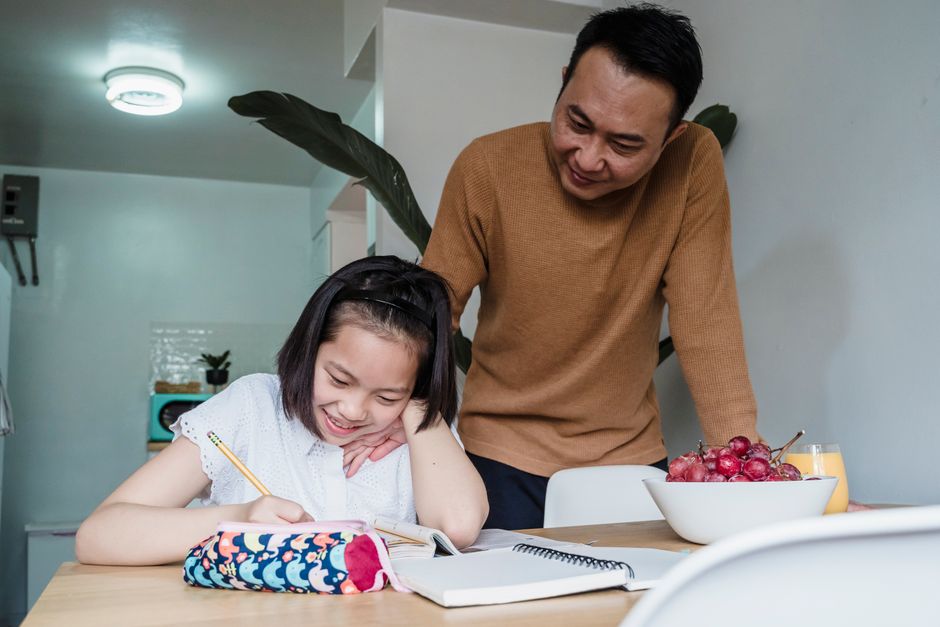
Photo: Mikhail Nilov
If you’ve had a note home about your child not concentrating, or you watch them drift off, fidget and lose the thread of their homework every night, it’s easy to feel worried or frustrated. The first thing worth saying is this: a child who can’t focus is almost never choosing to be difficult. Something is getting in the way, and once you can see what it is, you can usually help. After 30 years of working with local children, we’ve found that focus is far less about willpower than most people assume. It’s about the fit between the child and the work in front of them.
Why does my child lose focus so easily?
It helps to think of concentration as a window that opens when the work is pitched just right. Sit a capable child in front of a worksheet they mastered a year ago and their mind wanders, because there’s nothing there to hold it. Sit that same child in front of work that’s two years beyond them and they’ll shut down just as fast, because it feels impossible. In both cases the visible behaviour looks the same, a child who won’t settle, but the cause is opposite. That’s why "just concentrate" so rarely works. It treats a mismatch as a matter of effort.
What are the common causes of poor concentration?
It’s worth walking through these, because the right response depends entirely on which one you’re seeing.
- Boredom, because the work is too easy. A bright child who has already grasped the idea has nothing to push against, so their attention goes looking for something more interesting. This one is easy to miss, because we don’t expect a capable child to be the one struggling to focus.
- Frustration, because the work is too hard. When a child can’t find a way in, switching off feels safer than failing. Fidgeting, silliness or "I’m bored" can all be cover for "I don’t understand this and I don’t want you to know".
- Tiredness. A full school day, then activities, then homework at the end of it. Concentration is one of the first things to go when a child is running low, especially in the after-school slump.
- Anxiety or worry. A child turning something over in their mind, whether it’s friendships, a test, or the fear of getting an answer wrong, has less attention left for the page. Anxious children often look distracted rather than worried.
- A busy environment. Noise, screens, a sibling nearby or a cluttered table all pull at a child who is still building the skill of tuning distractions out.
- Genuine attention difficulties. For some children, sustained focus is genuinely harder, and no amount of the right conditions fully settles it. This is real and worth taking seriously, but it’s not the first explanation to reach for.
Notice that most of these are about the situation, not the child. That’s the hopeful part. Change the fit between the work and the child, and the focus often follows.
How does mismatched work drive off-task behaviour?
This is the single most useful idea we can offer, so it’s worth being clear about it. Off-task behaviour is a symptom. A child who’s tapping their pen, wandering to the kitchen for the third time, or turning homework into a negotiation is telling you something, even if they can’t put it into words: this work isn’t meeting me where I am. Sometimes the honest fix is to make the work harder and more interesting. Sometimes it’s to step back and rebuild an earlier idea that never fully landed. What almost never helps is more pressure to focus, because pressure doesn’t close the gap that caused the drifting in the first place.
Not sure whether the work is pitched right for your child? A free 30-minute assessment, one per subject, shows you exactly where they are. No cost, no obligation.
Book a free assessmentHow can I help my child concentrate at home?
None of these are dramatic. They’re the small, practical adjustments we see make the biggest difference to a child who struggles to settle.
Chunk the work into short blocks
Most primary-aged children can’t hold focus for a long stretch, and expecting them to sets everyone up to fail. Break homework into small pieces: a few questions, then a pause. "Let’s do these four, then stop" is far more achievable than "finish your maths". A short block a child can actually complete builds the sense of getting somewhere, and that feeling is what makes the next block possible.
Build in movement breaks
Fidgeting is often a child’s body asking to move. Rather than fighting it, plan for it. A quick stretch, a drink of water, a lap of the backyard, then back to the table. Movement resets attention rather than breaking it, as long as the break is short and the return is expected. For a child who really can’t sit still, letting them stand or squeeze something quiet in one hand can help too.
Set up a calm space
A distracted child rarely does their best work in front of the television or beside a busy kitchen. A consistent, tidy spot with good light and the phone in another room removes a lot of the pull before it starts. It doesn’t need to be a dedicated study; a cleared corner of the table at the same time each day is enough. Predictability itself helps, because a child who knows what’s coming spends less energy resisting it.
Match the challenge, and notice the effort
If homework is regularly a battle, it’s worth asking whether it’s genuinely too hard or too easy, and saying so gently to the teacher. And when your child does stay with something difficult, name it: "You stuck with that even though it was tricky." Praising the effort to concentrate, rather than only the right answers, tells a child that focus is something they’re building, not something they either have or don’t.

When should I talk to the school or seek an assessment?
Most focus wobbles are ordinary and pass with the right support. But some are worth a closer look, and there’s no harm in asking. Reasons to start a conversation with the school include a child who can’t concentrate across many settings, not just one subject; difficulty that’s lasted well beyond a term; or focus troubles that come alongside anxiety, low mood or a real dip in how your child feels about school. Your child’s teacher sees them in a different context to you, and comparing notes often clarifies a lot.
If those conversations don’t settle things, your GP is the right next step. They can talk through what you’re seeing and advise on whether a formal assessment with a qualified professional would be worthwhile. We’re educators, not clinicians, so this isn’t something we diagnose. What we can do is make sure the schoolwork itself isn’t the thing getting in the way, which is often a quieter part of the picture than it first appears.
How Lynn’s Learning can help with focus
Concentration is one of the three things we care about most, alongside confidence and ability, because a child who can settle and engage learns everything else more easily. A lot of what we do is simply making sure each child works at the right level. When the work fits, focus tends to follow, and the fidgeting, avoidance and "I’m bored" often ease without anyone ever having to nag about concentrating.
That’s why we start every child with a free assessment, about half an hour per subject. It shows us, and you, exactly where your child is, so we can pitch their work to the edge of what they can do: challenging enough to hold their attention, gentle enough not to overwhelm. We keep a low student-to-educator ratio, usually around one to five, so no child drifts off unnoticed, and we work in short, focused blocks by design. If the assessment suggests something beyond mis-pitched work, we’ll say so plainly and point you towards the right person, whether that’s the school or your GP.
Wondering if Lynn’s Learning is right for your child? Book a free, no-obligation assessment.
Book a free assessmentFrequently asked questions
Is it normal for a young child to have a short attention span?
Yes. Concentration builds gradually with age, and most primary-aged children can only focus in short bursts. Sustained attention is a skill that develops over years, which is why breaking work into small chunks suits how young children are naturally wired.
My child focuses fine on games but not homework. Why?
Games are designed to reward attention constantly and adjust to keep a child in the sweet spot. Homework often can’t. This usually points to fit and interest rather than an inability to concentrate, and it’s a good sign the focus itself is there when the task suits them.
Does poor concentration mean my child has ADHD?
Not on its own. Boredom, frustration, tiredness and worry all cause the same visible restlessness. Genuine attention conditions are real but are only one possibility, and only a qualified professional can assess for them. Your GP is the right place to start if you’re concerned.
Can Lynn’s Learning tell me if my child has an attention disorder?
No. We’re educators, not clinicians, so we don’t diagnose. What our free assessment can show is whether your child’s schoolwork is pitched at the right level, since mis-matched work is a very common and fixable cause of losing focus.
What year levels and subjects do you support?
We support children from Foundation to Year 10 in Maths and English across Melbourne’s south-east. Every child works at their own level, matched to where they actually are rather than their age.
More for parents

Why your child says "I’m bad at maths" (and how to change it)
"I’m just bad at maths" is a story your child has started telling themselves. It’s almost never true, and here’s how to change it.

Does my child need a tutor? An honest guide for Melbourne parents
Not every child needs one. The real signal is how your child feels about a subject, not just the grade, and there are clear signs to watch for.
How to motivate your child to do homework (without the nightly battle)
The nightly homework fight is rarely about laziness. It’s usually about routine, confidence, or a gap that’s grown quietly. Here’s how to change the pattern.